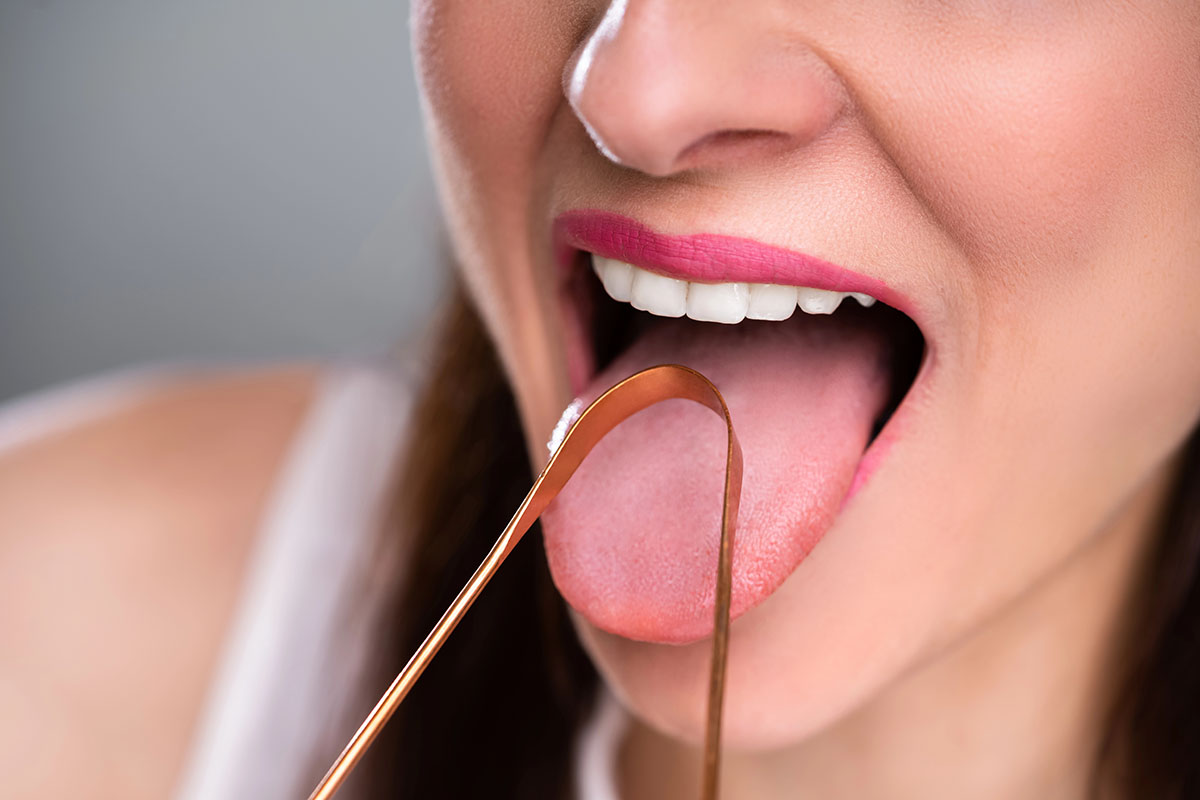
You already know to brush and floss. But what about your tongue? Tongue scraping has picked up a lot of attention lately as a way to fight bad breath and keep your mouth cleaner. Some patients swear by it, and your trusted San Marcos dentist may recommend it as part of a more complete routine.
The short answer: it works. Tongue scraping is a simple habit that can make a real difference when done correctly. It won’t replace brushing and flossing, but it’s a solid addition to your daily routine and pairs well with consistent dental checkups in San Marcos.
Here’s what it does, how to do it, and whether it’s right for you.
What Is the Purpose of Cleaning Your Tongue
Your tongue isn’t smooth. It’s covered in tiny bumps called papillae that trap food particles, dead cells, and bacteria throughout the day. Over time, this buildup forms a whitish or yellowish coating you can actually see.
That coating is a biofilm, essentially a colony of bacteria, and it’s one of the biggest sources of oral health problems. Brushing your tongue with a toothbrush helps some, but a dedicated tongue scraper is better at removing that layer because of how the edge is shaped.
The Benefits of Tongue Scraping
This takes about 30 seconds. Here’s what you get for it:
1. Less Bad Breath
This is the big one, and the most studied. Bacteria on the back of your tongue produce volatile sulfur compounds (VSCs), which are the main cause of bad breath. Brushing and flossing deal with bacteria on your teeth, but if you skip the tongue, you’re leaving a major odor source untouched. Research shows that scraping is more effective than brushing the tongue at reducing these compounds.
2. Better Sense of Taste
A layer of debris sitting on your tongue can block your taste buds from doing their job. Scraping that layer off exposes the taste buds, and many people notice food flavors becoming sharper and more distinct afterward.
3. A Healthier Mouth Overall
Bacteria on your tongue don’t just sit there. They spread, contributing to plaque buildup on your teeth and potential gum problems. Physically removing large amounts of these bacteria every day helps keep the bacterial balance in your mouth in better shape.
4. A Cleaner-Looking Tongue
A healthy tongue should look pink and relatively smooth. A thick white or yellow coating usually means bacterial buildup. Regular scraping keeps your tongue looking the way it should.
How to Use a Tongue Scraper Correctly
It’s straightforward, but technique matters.
- Start at the Back: Stand in front of a mirror, stick out your tongue, and place the curved edge of the scraper as far back as you’re comfortable with.
- Apply Gentle Pressure: Press the scraper against your tongue firmly enough to pick up the coating, but not so hard that it hurts.
- Pull Forward: Slowly pull the scraper from back to tip in one smooth motion.
- Rinse and Repeat: Rinse the scraper under water. Do this 3 to 5 times, or until you’re not pulling off much anymore.
- Finish Up: Rinse your mouth with water or mouthwash. Clean the scraper after each use.
FAQs
Can I just use my toothbrush to clean my tongue?
It’s better than nothing, but not as effective. Toothbrush bristles are built for hard tooth surfaces and tend to push the biofilm around rather than remove it. A scraper has a flat edge designed to lift that coating off the tongue’s soft surface.
How often should I scrape my tongue?
Once or twice a day works well. Morning is a good time since bacteria build up overnight, which is why “morning breath” happens.
Metal or plastic scraper?
Metal scrapers (stainless steel or copper) last longer and are easier to keep clean. Plastic ones cost less and are easier to find, but they wear out faster. Either works. It comes down to preference.
Will it make me gag?
It might at first. Start closer to the middle of your tongue and work your way back over time as you get used to it. Breathing out as you pull the scraper forward can also help.
Will tongue scraping fix my bad breath?
It’s one of the best daily habits for managing breath caused by tongue bacteria. But it’s not a permanent fix on its own. Chronic bad breath can also come from gum disease, dry mouth, or other medical conditions. If the problem sticks around despite good oral hygiene, see your dentist for a full evaluation.
Is tongue scraping safe to do every day?
Yes, as long as you’re gentle. Don’t press too hard or you’ll irritate the tissue.
What does a white tongue mean?
It usually means bacteria and debris have built up on the surface. Scraping can clear it. If the coating doesn’t go away or you’re experiencing discomfort, talk to your dentist.
A Small Step with Real Results
So, does tongue scraping help? For most people, yes. It reduces bad breath, sharpens your sense of taste, and keeps your mouth cleaner overall, especially when combined with consistent San Marcos teeth cleaning.
It takes 30 seconds, costs almost nothing, and the difference is noticeable. If you’re looking for one easy upgrade to your oral hygiene routine, this is a good one.