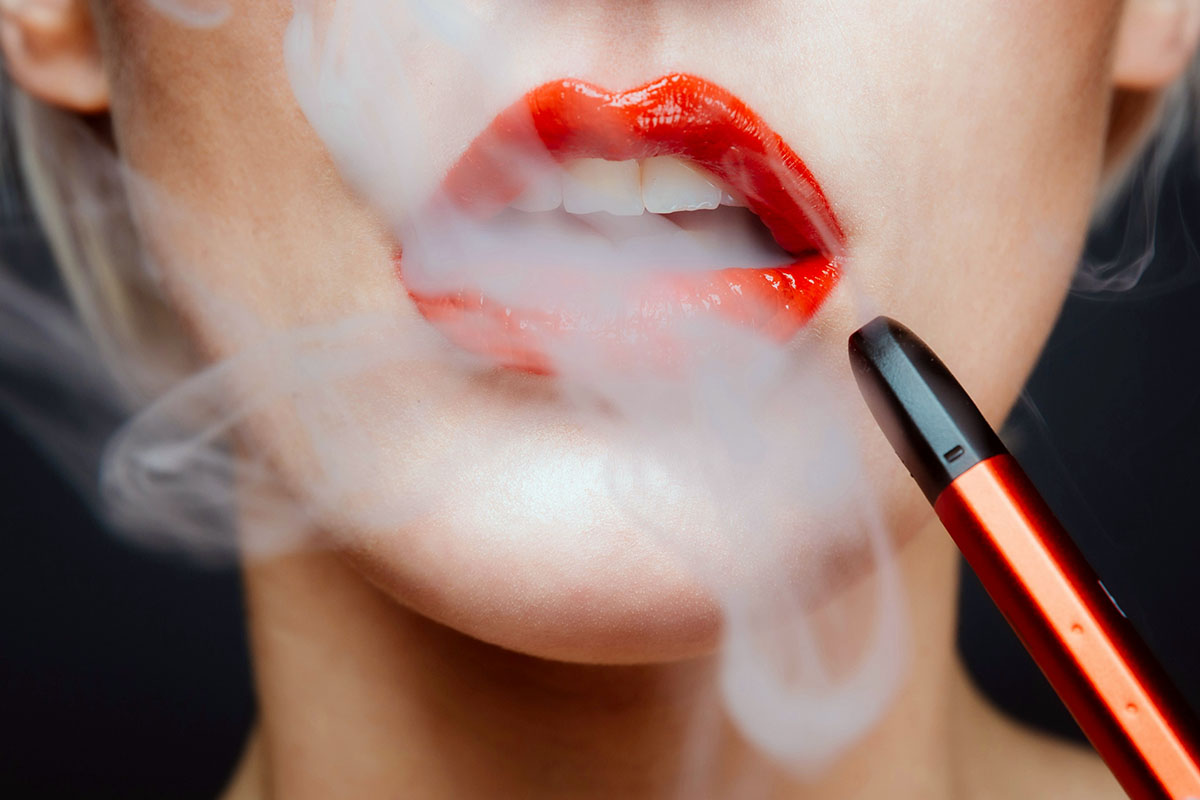
Good oral hygiene starts with home care and regular professional cleanings, but those habits do not cancel out daily exposure to tobacco or nicotine. NIDCR identifies smoking or using tobacco products as the most significant risk factor for gum disease, which is why cigarettes, cigars, chewing tobacco, and electronic vaping devices all matter to the long-term health of your teeth and gums.
Most people hear about the heart and lung risks of tobacco, but the mouth often takes the first hit. Cigarette smoke contains more than 7,000 chemicals, according to the CDC, and e-cigarettes generate an aerosol with harmful substances rather than harmless water vapor, according to the FDA. That chemical and heat exposure hits the gums, tongue, cheeks, and enamel directly, which is why understanding it helps you make better decisions about your oral health.
Traditional Smoking and Your Smile
Combustible tobacco sends thousands of chemical compounds straight through the mouth, so one of the first obvious effects is tooth discoloration. Tar is naturally dark and nicotine turns yellow after it meets oxygen; both can cling to enamel and work into tiny pores on the tooth surface, leaving yellow or brown stains that regular brushing usually cannot remove. The deeper problem is that smoking does not just stain teeth. It changes the mouth’s bacterial environment in ways that can speed up dental disease.
Increased Risk of Periodontal Disease
Gum disease, also called periodontal disease, is one of the biggest threats to adult dental health and a major reason people lose teeth later in life. The CDC says smokers have twice the risk of gum disease as nonsmokers, and NIDCR calls smoking or using tobacco products its most significant risk factor. Nicotine can constrict blood vessels, and smoking also weakens the body’s ability to fight infection, so gum tissue gets less oxygen and fewer nutrients right when it needs both to control bacteria and heal.
That reduced blood flow can make smoking-related gum disease look quieter than it really is. Heavy smokers may have less bleeding or swelling even when infection is active, so dentists do not rely on appearance alone; they also check pocket depths with a periodontal probe and look for bone loss on X-rays. By the time the damage is obvious, the bone around the roots of the teeth may already be badly affected.
Impaired Healing and Delayed Recovery
After a routine tooth extraction, dental implant placement, or deep gum therapy, healing depends on blood supply, oxygen, collagen production, and a normal cellular response. NIDCR notes that tobacco use can delay healing, and a 2016 review in the Journal of the American Dental Association found that patients who smoke may be at about twice the risk of dental implant failure. In practical terms, that can mean a slower recovery, more soreness after a procedure, and a higher chance that an implant will not integrate well with the bone.
Oral Cancer Vulnerability
Tobacco smoke exposes oral tissues to carcinogens, which raises the risk of oral cancer. NIDCR says these cancers can develop on the tongue, floor of the mouth, gums, inner cheek lining, soft palate, and the back of the throat, and the institute estimated about 54,000 new U.S. cases in 2022. That is why routine dental exams matter: they give your dentist a chance to check for persistent sores, red or white patches, lumps, and other precancerous changes early, when treatment usually has the best chance of success.
The Hidden Oral Risks of Vaping
E-cigarettes and vape pens are often sold as cleaner or safer than traditional cigarettes, but that is not the same as harmless. They do avoid combustion and tar, yet the FDA says e-cigarette aerosols can stick to the gums, tongue, teeth, and even dental implants, which may promote bacterial buildup and decay, and the CDC notes that many products contain nicotine, heavy metals such as nickel and lead, and other harmful substances. As of 2026, the evidence on long-term oral damage is still developing, but the ADA reports early links to more cavities, more gingival inflammation, delayed wound healing, and possible periodontitis.
Nicotine Content and Gum Recession
The vast majority of e-liquids are sold with concentrated nicotine, even though nicotine-free versions exist. Like traditional cigarettes, vaporized nicotine can restrict blood supply to the gums, which means less oxygen and fewer nutrients reach the tissue. Over time, that chronic drop in micro-circulation can contribute to tissue atrophy and progressive gum recession. Once tooth roots are exposed, they are far more sensitive to hot and cold and significantly more vulnerable to decay than enamel-covered surfaces.
Propylene Glycol and Dry Mouth
A primary base ingredient in e-liquids is propylene glycol (PG). Because PG is hygroscopic, inhaling it can pull moisture from the oral cavity and leave you with chronic dry mouth, or xerostomia. That matters because saliva is your mouth’s main natural defense. The National Institute of Dental and Craniofacial Research notes that saliva helps neutralize acids, wash away food particles, and supply the minerals that remineralize enamel.
When saliva production drops, bacteria gain ground fast. Acid-producing species get more time on the tooth surface, and the oral microbiome can shift out of balance. That creates the right conditions for accelerated plaque accumulation, persistent bad breath, and widespread tooth decay.
Vegetable Glycerin and Flavoring Additives
Many e-liquids use vegetable glycerin (VG) along with artificial flavorings to create sweeter, more appealing tastes. In a 2018 laboratory study published in PLOS ONE, flavored e-cigarette aerosols produced a fourfold increase in bacterial adhesion to tooth enamel, along with more biofilm formation and lower enamel hardness. That sticky, viscous residue can cling deep in the fissures of molars, letting acidic compounds sit longer on the surface, soften enamel, and foster aggressive cavity formation.
Comparing Tobacco Smoke and E-Cigarette Vapor
| Oral Health Impact | Traditional Smoking | Electronic Vaping |
| Tooth Staining | Severe tar and nicotine discoloration | Minimal to moderate yellowing |
| Bacterial Growth | High due to reduced oral immunity | High due to sugary flavorings and dry mouth |
| Gum Tissue Damage | Severe blood flow restriction and bone loss | Moderate to severe blood flow restriction |
| Salivary Reduction | Moderate reduction | High reduction (caused by Propylene Glycol) |
| Oral Cancer Risk | Exceptionally high | Under ongoing long-term clinical study |
Practical Steps to Protect Your Teeth and Gums
If you currently use tobacco or vaping products, think in terms of damage control. Good daily habits and regular dental care will not make smoking or vaping safe, but they can help minimize structural damage to your smile and catch problems before they get harder to treat.
- Maintain Good Hygiene: Brush twice a day with a soft-bristled brush and fluoride toothpaste, ideally for 2 minutes each time. Floss every day to remove hidden bacterial plaque between teeth, especially because nicotine-related vasoconstriction can make early gum disease easier to miss.
- Stay Hydrated: Drink plenty of water throughout the day to counter the drying effects of inhaled vapors. If dry mouth is a recurring problem, sugar-free gum or lozenges with xylitol can also help stimulate natural saliva production between meals.
- Use Alcohol-Free Rinses: Choose an antibacterial mouthwash that does not contain alcohol, because alcohol can worsen existing dry mouth symptoms. If cavity risk is high, ask your dentist whether an alcohol-free fluoride rinse makes more sense than a cosmetic breath rinse.
- Keep Regular Dental Checkups: Routine professional cleanings and full oral exams give your dentist a chance to catch early signs of tissue damage or decay before severe complications arise. In people who smoke or vape, periodontal pocket measurements and, when indicated, bitewing X-rays often catch problems before they become obvious.
FAQs
Can vaping cause cavities even if the e-liquid contains no nicotine?
Yes. Nicotine-free e-liquids still use propylene glycol and vegetable glycerin base fluids alongside artificial flavorings, and those ingredients can still stress the mouth. Propylene glycol causes dry mouth, while vegetable glycerin and sticky flavor residues can help bacteria cling to tooth enamel, creating a high-risk environment for decay regardless of nicotine content. Some products sold as nicotine-free have also tested with trace nicotine, which is one more reason not to assume they are harmless.
How quickly can smoking cause noticeable damage to gum tissue?
Gum changes can start immediately at a cellular level because nicotine reduces micro-vascular blood flow, but the exact timeline for visible damage is not the same for everyone. Signs such as gum recession, deep periodontal pockets, or loose teeth may show up after a few months to a few years of consistent use, depending on frequency, individual genetics, and how much existing gum disease was already present.
Will professional teeth whitening remove deep smoking stains?
Professional dental whitening can lift many stubborn surface stains linked to tar and nicotine. The ADA notes that tobacco often turns enamel yellow or brown, and its whitening guidance separates those surface stains from intrinsic discoloration inside the tooth. When staining has settled under the enamel over decades, bleaching may not get you all the way there, and cosmetic options such as dental bonding or porcelain veneers may be the better path to complete aesthetic restoration.
Does switching from cigarettes to vaping reduce my risk of gum disease?
Vaping cuts out combustion tar, but it does not remove nicotine. TheADA warns that vaping is still associated with gum disease, bone damage, and tooth loss, and research indexed in other studies has long noted that nicotine can alter gingival blood flow and healing. In practical terms, the risk of inflammation, recession, and periodontal bone loss does not disappear just because the smoke is gone.
What should I do if I notice bleeding or receding gums?
Contact your dental office promptly for a comprehensive evaluation, especially if you have bleeding gums, recession, bad breath, or loose teeth. The National Institute of Dental and Craniofacial Research notes that gum disease can progress to damage in the bone and tissue that support your teeth, while the ADA points to scaling and root planing as a common non-surgical treatment when the problem is caught before it gets deeper. Early diagnosis gives you the best chance to use conservative, non-surgical gum therapies to arrest tissue damage before bone loss becomes irreversible.
Partnering with Larry Molenda for a Lifetime of Oral Health
Protecting your smile from the effects of smoking or vaping usually takes steady preventive care and, when needed, specialized professional attention. At the practice of Larry Molenda, D.D.S., we focus on gentle, individualized treatment aimed at preserving your natural teeth and maintaining healthy gum tissue.
Whether you need a routine preventive checkup, non-surgical gum therapy, or cosmetic restoration to refresh your smile, we are here to support your health without judgment. If smoking or vaping has left you with stains, bleeding gums, recession, or persistent bad breath, take the first step toward safeguarding your teeth today instead of waiting for a small problem to turn into a bigger one. Call our office to schedule your next appointment.