A missing tooth does far more than just affect the appearance of your smile. Over time, an untreated gap can cause adjacent teeth to shift out of alignment, impair your ability to chew comfortably, and even lead to bone loss in your jaw. Fortunately, modern restorative dentistry provides reliable options to complete your smile and safeguard your long-term oral health.
When evaluating restorative treatments, the two most effective options are dental implants and fixed dental bridges. While both options fill the empty space and restore function, they function differently beneath the surface. Understanding how each approach works will help you make an informed decision for your smile.
Dental Implants
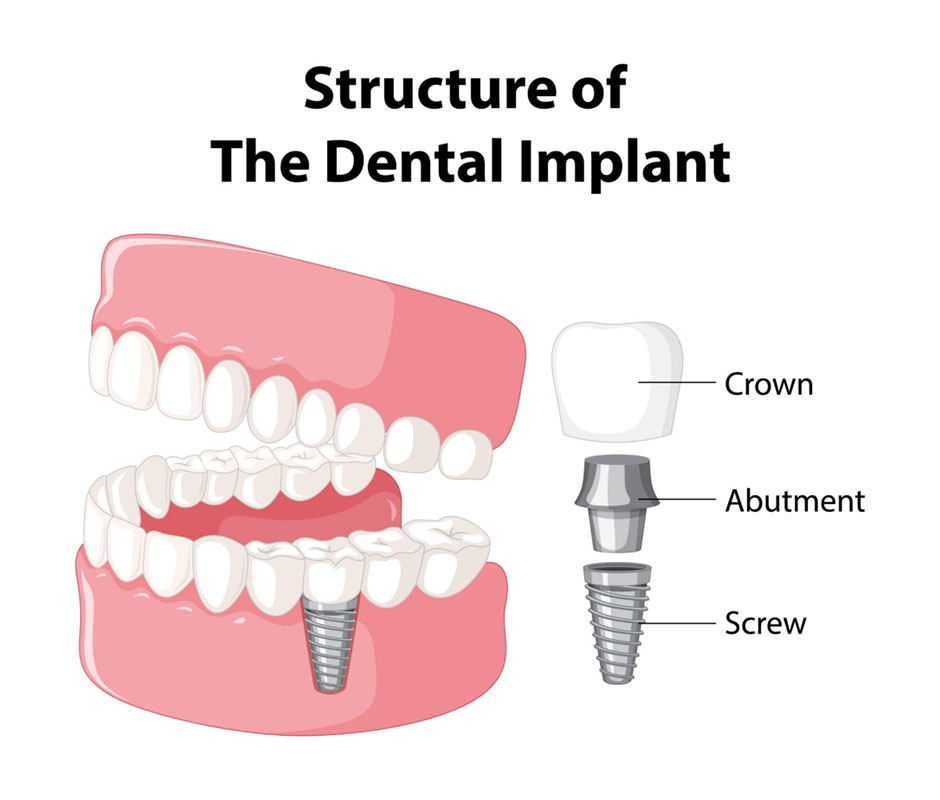
A dental implant is a permanent, standalone replacement for a missing tooth. The procedure involves placing a small titanium post directly into the jawbone, where it serves as a substitute root. Over a period of several months, the bone integrates with the titanium post through a natural healing process called osseointegration.
Once the implant post has integrated, an abutment is connected to hold a custom-crafted dental crown. Because the implant relies entirely on the jawbone for stability, it does not depend on adjacent teeth for support.
Benefits of Dental Implants
- Jawbone Preservation: By mimicking a natural root, the implant stimulates the jawbone and prevents the bone deterioration that typically occurs after tooth loss.
- Protection of Adjacent Teeth: Surrounding natural teeth remain completely untouched during placement, preserving their original structure.
- Longevity: With proper brushing, flossing, and routine dental checkups, the titanium post can last a lifetime.
- Natural Look and Feel: Dental implants look, feel, and function just like natural teeth, allowing you to eat your favorite foods with full confidence.
Fixed Dental Bridges
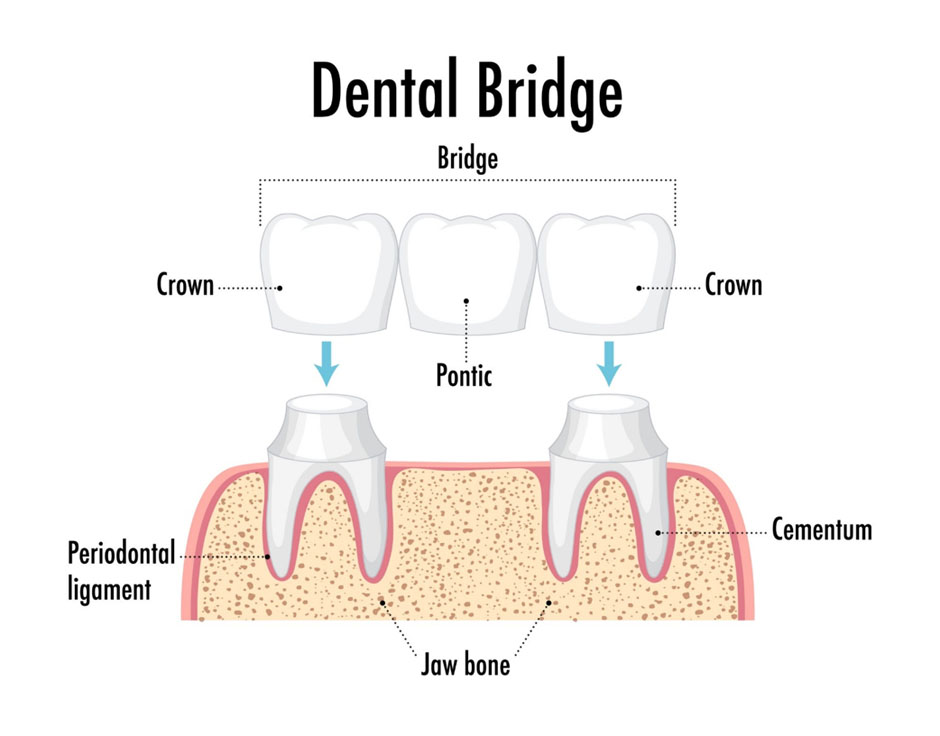
A fixed dental bridge is a traditional restorative treatment that bridges the gap created by one or more missing teeth. The bridge consists of a artificial tooth (called a pontic) anchored in place by dental crowns fitted over the natural teeth on either side of the space.
To place a fixed bridge, the neighbouring teeth (known as abutment teeth) must be shaped and re-contoured so the protective crowns can fit over them securely. The complete restoration is then permanently cemented into place.
Benefits of Fixed Dental Bridges
- Faster Treatment Timeline: A dental bridge can usually be completed in just two to three office visits over a few weeks.
- No Surgical Procedure: Bridges do not require oral surgery or healing time for bone integration, making them ideal for patients who prefer non-surgical options.
- Lower Initial Cost: The initial upfront investment for a bridge is often lower than that of a single dental implant.
- Proven Track Record: Bridges have been used successfully in dentistry for decades to restore function and aesthetics efficiently.
Dental Implant vs. Fixed Bridge: Direct Comparison
Choosing the ideal restoration depends on your unique oral health, timeline, and personal goals. The table below highlights how these two treatment paths compare across key factors.
| Feature | Dental Implant | Fixed Dental Bridge |
| Treatment Timeline | 3 to 6 months (requires healing) | 2 to 3 weeks (2 to 3 visits) |
| Impact on Nearby Teeth | None (standalone structure) | Adjacent teeth must be reshaped |
| Bone Health | Preserves jawbone structure | Does not prevent jawbone loss |
| Average Lifespan | 20+ years to lifetime | 10 to 15 years with proper care |
| Surgical Requirement | Yes (minor placement procedure) | No |
| Maintenance | Normal brushing and flossing | Special flossing under the pontic |
Factors to Consider When Choosing Your Restoration
1. Overall Oral and Bone Health
To receive a dental implant, you must have adequate jawbone density to anchor the post securely. If bone loss has already occurred, a bone graft may be recommended prior to placement. Patients with certain unmanaged health conditions may also find a fixed bridge to be the more practical choice.
2. Treatment Timeline Expectations
If you need a quick restoration for an upcoming event or simply prefer to finalize your treatment in a short window, a bridge provides a faster resolution. Implants require patience while the bone heals around the post, but they offer long-term performance in return.
3. Long-Term Value and Maintenance
While a fixed bridge may offer lower upfront costs, it will likely need replacement after 10 to 15 years. Dental implants have a higher initial cost, but their long lifespan often makes them a cost-effective choice over tim. Implants are cleaned just like natural teeth, whereas bridges require special threading floss to clean underneath the floating artificial tooth.
FAQs
Is the dental implant procedure painful?
Local anaesthesia is used during the implant placement procedure to ensure you remain comfortable. Most patients report only mild tenderness for a few days afterward, which is easily managed with over-the-counter medication.
How long does a dental bridge typically last?
With consistent oral hygiene and routine professional cleanings, a dental bridge typically lasts between 10 and 15 years before requiring maintenance or replacement.
Can a bridge be replaced with a dental implant later on?
Yes. If you currently have a fixed bridge and decide you want an implant in the future, your dentist can evaluate your jawbone density and design a personalized plan to transition to an implant.
Will insurance cover implants or bridges?
Coverage varies depending on your specific dental policy. Many dental plans cover a portion of fixed bridges, and an increasing number of providers offer coverage or allowances for implant components.
How do I clean underneath a dental bridge?
Cleaning beneath a bridge requires using a threader floss, interdental brush, or water flosser to remove food debris and plaque from under the artificial tooth and keep the supporting gums healthy.
Take the Next Step Toward a Complete Smile
Restoring missing teeth protects your remaining teeth from shifting, supports proper jaw function, and brings back full confidence in your smile. Both dental implants and fixed bridges offer reliable, beautiful results tailored to individual needs.
At our practice, we take a personalized, patient-centered approach to restorative care. With decades of experience serving the San Marcos community, Dr. Molenda evaluates your unique oral health and helps you select the option that fits your lifestyle and budget best. Reach out to our office today to schedule your consultation and start your journey toward a healthy smile.