Dental anxiety is more common than most people admit. Research published in dental literature estimates that somewhere between 9% and 20% of Americans avoid the dentist due to fear, not mild nerves, but genuine dread that pushes necessary care off for years. The drill noise, the smell, the memory of a painful extraction: these stack up into a fear response that willpower alone doesn’t fix.
For most of dentistry’s history, the only clinical advice for anxious patients was to push through it. Now there’s an actual solution. Sedation dentistry uses FDA-approved medications to keep you conscious but deeply relaxed, you stay awake and can respond to your dentist, you just stop caring about what’s happening in your mouth. Most patients describe it as the first dental visit they didn’t spend dreading.
If you’ve pushed an appointment back for months, gripped the armrests through a cleaning, or skipped a crown you knew you needed, sedation dentistry is worth a direct conversation with your dentist.
Who Is a Good Candidate for Sedation Dentistry?
Dental phobia is the most common reason patients ask about sedation, but it’s far from the only one. You’re likely a candidate if you:
- Deal with high dental anxiety or fear: Sedation breaks the avoidance cycle. Patients who’ve cancelled appointments for years often find that one sedated visit changes their entire relationship with dental care going forward.
- Have a sensitive gag reflex: Sedation suppresses the reflex substantially, which makes longer procedures tolerable for you and more efficient for the dentist, fewer stops, less repositioning, less total time in the chair.
- Need extensive or complex work: Multiple fillings, crowns, extractions, or implant preparation can often be completed in a single long appointment under sedation rather than spread across five or six separate visits. For patients who dread each visit independently, consolidating that work is a real quality-of-life difference.
- Have trouble getting numb: Some people metabolize local anesthetics faster than average, or have anatomical factors that reduce how well numbing takes hold. Sedation lowers your overall sensitivity and anxiety, which frequently makes the local anesthetic work more reliably.
Live with chronic back, neck, or jaw pain: An hour in a dental chair with your mouth open is physically hard even for healthy patients. If you have TMJ issues, a herniated disc, or significant neck stiffness, sedation helps your muscles stay relaxed rather than tensing against the sustained discomfort.
The Levels of Sedation Dentistry
Sedation dentistry isn’t one technique. It’s a range of options with different depths of effect, different recovery timelines, and different appropriate uses, what works for an anxious patient getting a routine cleaning is not the same as what’s appropriate for someone having four wisdom teeth extracted.
1. Nitrous Oxide (Inhaled Sedation)
The mildest option, and the one most general dentists offer in-house without a specialist referral.
How it works:
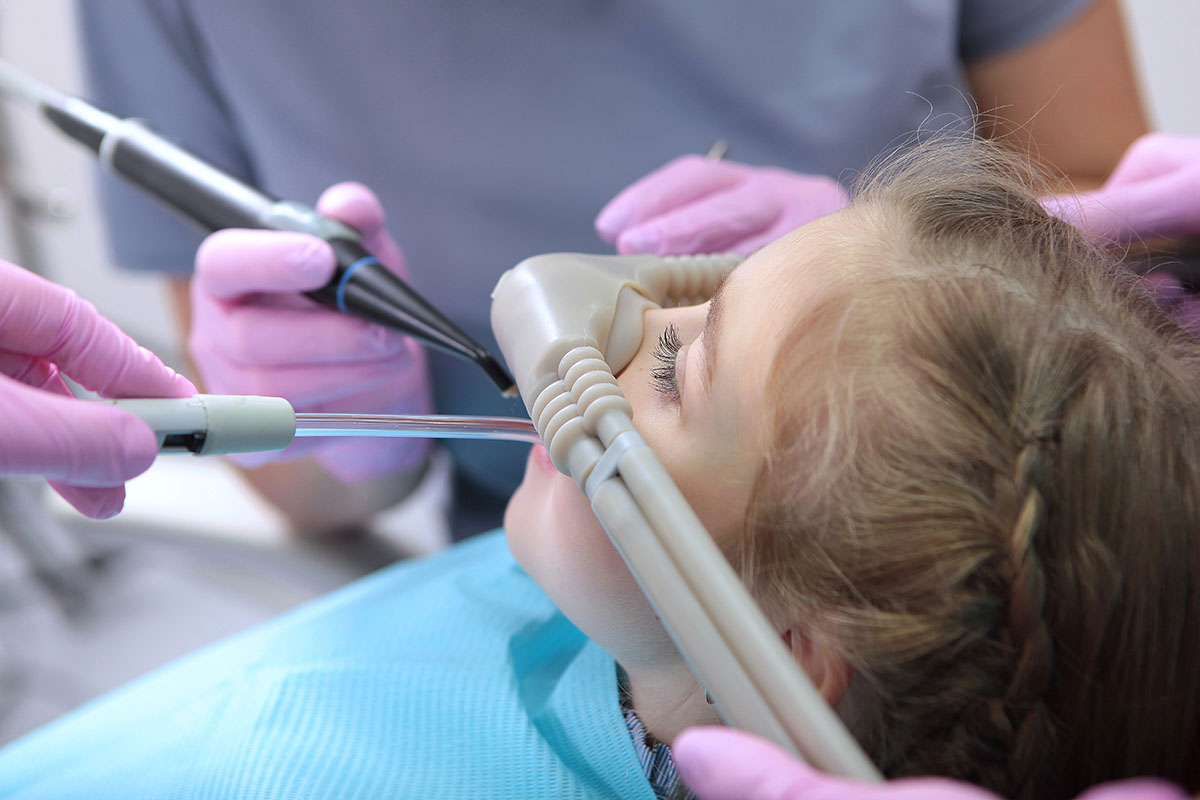
A small mask fits over your nose and delivers a calibrated blend of nitrous oxide and oxygen throughout the procedure. You stay awake and can answer questions, the gas reduces anxiety, not consciousness. When the mask comes off, the effect clears within minutes, which is why most patients can drive home afterward.
What patients feel:
Most describe a floating sensation, mild warmth, and a general sense of not particularly caring what’s happening. Light-headedness and tingling in the hands and feet are common and expected, they’re not side effects to worry about, just signs the gas is working.
Effects start within 3-5 minutes and clear just as fast once the mask comes off. You can drive yourself home after the appointment.
2. Oral Conscious Sedation
A step up in intensity, this option works better for patients with moderate to severe dental anxiety.
How it works:
Your dentist prescribes a sedative pill, typically triazolam (Halcion) or diazepam (Valium), that you take roughly an hour before you arrive.
What it feels like:
Most patients describe feeling heavy-limbed and distant from what’s happening around them. Drifting off mid-procedure is common, but you’ll respond if someone speaks to you or taps your shoulder. The effect patients notice most afterward: little to no memory of the appointment. That’s a normal side effect of this class of medication, not a sign anything went wrong.
This level of sedation reliably quiets even severe anxiety and controls a strong gag reflex, two of the main reasons patients avoid necessary dental care for years. Because the medication stays active for several hours after the procedure, you’ll need a trusted adult to drive you to and from the office.
FAQs
Is sedation dentistry safe?
Yes, when administered by a trained dental professional following standard protocols. Before we administer any sedation, we review your full medical history to screen for contraindications. During the procedure, we monitor heart rate, blood pressure, and blood oxygen saturation the entire time.
Will I feel any pain during the procedure?
Sedation handles anxiety, local anesthetic handles pain. You’ll still receive numbing injections at the treatment site. The difference is that sedation leaves you relaxed enough that the process of getting those shots is unlikely to bother you, and most patients don’t remember it afterward.
Does my insurance cover sedation dentistry?
It depends on your specific plan. Some insurers cover sedation when it’s medically necessary, for complex oral surgery, for example, but classify it as elective for routine work. Our front desk can run a benefits check before your appointment and walk you through any out-of-pocket costs so there are no surprises on the day.
What is the difference between sedation and general anesthesia?
The key difference is consciousness. With sedation, you stay awake, breathe on your own, and can respond to simple instructions, you’re just deeply relaxed. General anesthesia renders you fully unconscious and requires active airway management; it’s reserved for hospital or surgical center settings. We do not use general anesthesia in this office.
Will I be completely asleep during sedation?
Not with nitrous oxide or oral conscious sedation, both keep you conscious. You’ll be deeply relaxed and may drift into a light doze, but a word from your dentist or a gentle touch brings you right back. The goal is comfort, not unconsciousness.
Do I need someone to drive me home?
It depends on the type used. Nitrous oxide clears your system within minutes of switching back to room air, so most patients can drive themselves. Oral conscious sedation is different, the medication typically stays active for 4 to 6 hours after you take it. You’ll need a driver both ways and someone to stay with you for a few hours afterward. Plan to keep that afternoon clear; it’s not the time to cook, work, or make any decisions that matter.
How long does the sedation last?
Nitrous oxide is gone within minutes of ending the gas flow, most patients feel completely normal before they leave the chair. Oral sedation lingers longer, typically 4 to 6 hours after you take the pill. Plan to rest for the remainder of the day and avoid driving, operating machinery, or anything that requires sharp concentration until the following morning.
What Comfortable Dentistry Changes
For a lot of people, the real problem isn’t one bad appointment, it’s the pattern that follows. Fear leads to cancellations, cancellations lead to skipped care, and skipped care turns small problems into expensive ones. Sedation dentistry interrupts that cycle. One appointment where nothing hurt and nobody rushed you can shift how you think about coming back. That’s not a marketing promise; it’s what tends to happen when the thing you were dreading turns out to be manageable. We’d rather give you that experience than spend years rescheduling.
If sedation sounds like it might work for you, the next step is a short conversation, no commitment, just a chance to ask questions and hear what your options are.