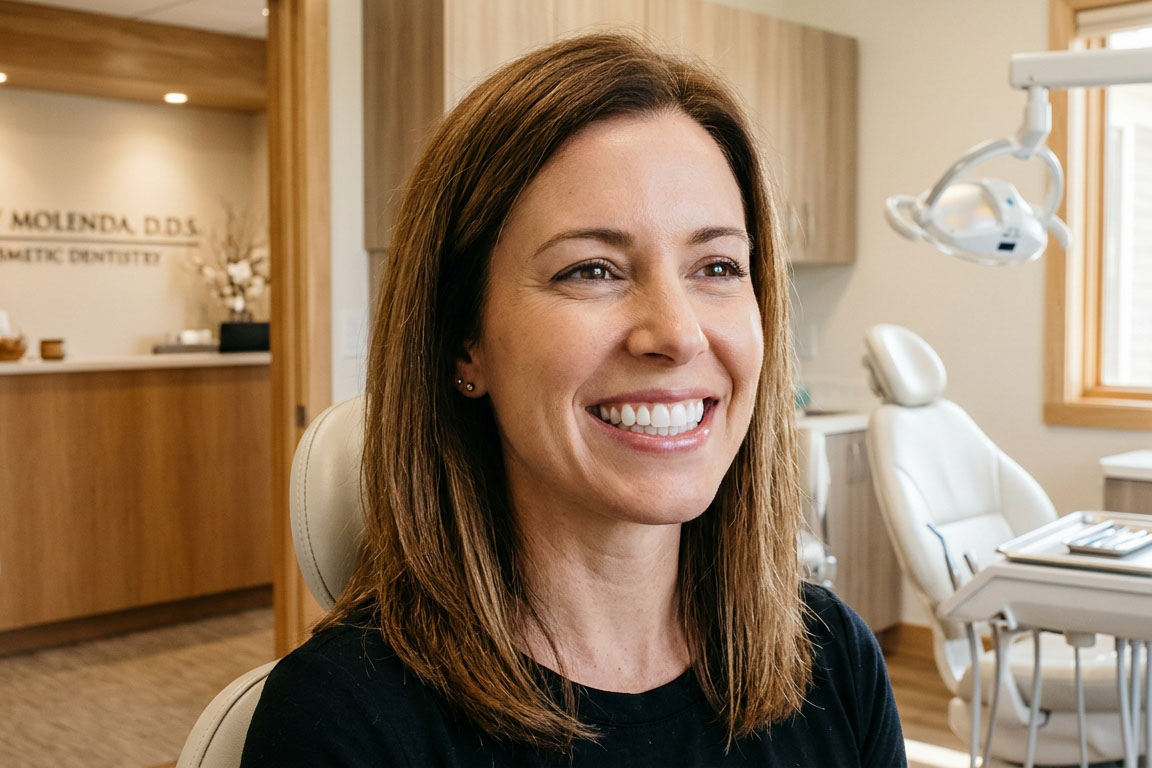
Improving your smile often affects more than appearance. It can change your self-confidence, the way you present yourself, and your day-to-day sense of well-being. Modern cosmetic dentistry offers several ways to address discoloration, minor misalignment, chips, and missing teeth, including whitening, bonding, veneers, and implants.
When patients think about cosmetic dental work, longevity is usually one of the first things they ask about. How many years should you expect these improvements to last, and what actually affects that timeline over time, from the material itself to daily habits?
At the office of Larry Molenda, D.D.S., patient care focuses on smiles that look natural, function well, and hold up over time. Knowing the usual lifespan of each treatment makes it easier to weigh cost, upkeep, lifestyle fit, and the appearance you want before moving forward.
Direct Dental Bonding: Quick Enhancements and Realistic Expectations
Dental bonding is one of the quickest and most conservative cosmetic treatments available. Your dentist applies a moldable, tooth-colored composite resin directly to the tooth, then shapes it to repair minor chips, close small gaps, or cover deep discoloration.
Average Lifespan
On average, dental bonding lasts between 3 and 10 years. Because the composite resin is bonded directly to the existing tooth surface, how long it lasts depends heavily on where the repair is placed and what your daily habits look like.
Factors Affecting Durability
Composite resin is durable, but it is not quite as hard as natural enamel or porcelain. Chewing on hard items like ice or pen caps can chip the material, and grinding can wear it down faster. Composite resin can also pick up stains over time from coffee, tea, red wine, and tobacco, which gradually changes how well the color matches the surrounding tooth.
Professional Teeth Whitening: Brightness Maintenance
Professional teeth whitening remains one of the fastest ways to refresh your smile. In-office whitening uses high-concentration clinical gels, with your dentist controlling the application and protecting the soft tissues, to lift deeper stains within the enamel more safely and more effectively than over-the-counter kits.
Average Lifespan of Common Cosmetic Procedures
- Professional Whitening: 6 Months – 3 Years
- Dental Bonding: 3 – 10 Years
- Clear Aligners: Lifetime (With Retainer)
- Porcelain Veneers: 10 – 20 Years
- Dental Implants: 15 – 25+ Years
Lifespan
Results typically last anywhere from 6 months up to 3 years. Whitening is different because it does not create a permanent structural change in the tooth, which means regular maintenance is part of keeping your smile bright.
Factors Affecting Durability
What you drink and eat each day has the biggest effect on how long whitening lasts. Dark liquids such as coffee, tea, red wine, and cola, along with acidic foods and smoking, speed up stain buildup. Custom touch-up trays from your dentist can make maintenance easier and help extend your bright results.
Porcelain Veneers: Durable and Long-Lasting Esthetics
For a full smile makeover, porcelain veneers are a standard option because they change what people notice first without rebuilding the whole tooth. A veneer is a very thin shell of dental ceramic bonded to the front surface of a natural tooth, so it can correct color, shape, size, and slight alignment issues, including worn edges, small chips, or one tooth that looks darker than the rest.
Lifespan
With good home care and regular dental visits, porcelain veneers often last 10 to 20 years. Dental porcelain is a hard, wear-resistant material, so normal day-to-day chewing usually is not what ends a veneer first.
Key Factors Affecting Durability
Unlike composite resin, high-grade porcelain is less porous, so it tends to resist stains from dark foods and drinks such as coffee, tea, and red wine. The tooth underneath still needs protection, though. Healthy gums and a balanced bite matter because veneers stay secure when the supporting tooth is sound and they are not absorbing extra pressure from clenching or misalignment.
Clear Aligners: Straightening Teeth for a Lifetime
Cosmetic dental care often includes structural alignment with clear aligners such as ClearCorrect or Invisalign. These systems move natural teeth little by little with a series of custom trays, which can improve the look of a smile and help the bite come together more evenly.
Lifespan
The goal of orthodontic aligner treatment is a result that lasts a lifetime.
Key Factors Affecting Durability
How long clear aligner results last depends almost entirely on what happens after treatment. Teeth naturally tend to drift back toward their original positions over time, especially if retainers are skipped. Wearing your custom retainer exactly as your dental team directs, is what gives you the best chance of keeping those newly aligned teeth in place for the long term and, in many cases, permanently.
Dental Implants and Crowns: High-Strength Restorative Care
When a tooth is badly damaged or missing altogether, cosmetic-restorative options like dental crowns and dental implants are usually the most stable choices. Crowns cover and reinforce a tooth that can still be saved. Implants replace the root structure with a durable titanium post set in the jaw, then restore the visible part of the tooth with a custom-crafted porcelain crown.
Lifespan
The titanium implant post underneath is the part that can last 25 years to a lifetime. The custom crown attached to that post usually lasts 10 to 15 years before normal wear, minor chipping, or cosmetic changes mean it may need a touch-up or replacement.
Factors Affecting Durability
Dental implants stay in place because the titanium post fuses directly with the jawbone in a healing process called osseointegration. That bond can hold for decades, but it depends on the basics: strong bone support, healthy gum tissue, and control of inflammation around the implant site.
Essential Daily Practices to Protect Your Dental Investment
Whatever cosmetic treatment you choose, from veneers and clear aligners to crowns and implants, the life of your restorations depends heavily on how well you care for your teeth and gums afterward.
- Maintain a Consistent Hygiene Routine: Brush twice a day with a soft-bristled toothbrush and a non-abrasive fluoride toothpaste, and floss once a day so plaque does not sit at the margins around veneers, crowns, and other restorations.
- Wear a Custom Nightguard: If you grind or clench your teeth during sleep, a habit called bruxism, a custom nightguard helps spread that force and protects porcelain and composite materials from chipping under pressure.
- Avoid Using Teeth as Tools: Never use your teeth to open packages, tear tape, or hold hard objects like pens, bobby pins, or bottle caps.
- Schedule Regular Clinical Cleanings: Bi-annual professional checkups, meaning twice-yearly visits, let your dentist catch early signs of wear, evaluate restorative margins, and polish your tooth surfaces safely without scratching porcelain or composite.
FAQs
Are cosmetic dental procedures covered by standard insurance plans?
Most dental plans treat teeth whitening and porcelain veneers as elective cosmetic care, so they often do not cover the cost; whitening is typically not covered, and veneers are usually considered cosmetic unless they are medically necessary. Crowns and dental implants may get partial coverage because they can restore function or replace a missing tooth, but the exact benefit still depends on medical necessity, waiting periods, and the plan’s annual maximum.
What happens when porcelain veneers eventually need replacement?
When porcelain veneers reach the end of their lifespan, the replacement process is usually straightforward: your dentist carefully removes the old ceramic, cleans off the bonding material, inspects the natural tooth underneath for wear or decay, takes fresh digital impressions, and then bonds a new set of custom veneers.
Will dental bonding or porcelain veneers damage my natural teeth?
In general, no, cosmetic procedures are usually safe when a licensed, experienced dentist checks for problems like decay or gum disease first and then does the work. Bonding may need little or no enamel removal, veneers require some enamel removal so they sit flush against the tooth and look natural.
Can teeth whitening harm my natural tooth enamel?
For most patients, professional teeth whitening under a dentist’s supervision is considered safe for enamel when the gel is used as directed. Dentist-supervised whitening can be done in the office or with custom trays, and these clinical gels, usually hydrogen peroxide or carbamide peroxide, lift surface and deeper stains by oxidation rather than scraping enamel away.
How do I know which cosmetic treatment is best for my smile goals?
The best procedure depends on your tooth shape, enamel thickness, bite, gum health, smile goals, and budget. A thorough cosmetic evaluation can include an exam and, when needed, photos, digital X-rays, or scans; X-rays help dentists find problems that are not visible during a routine exam, which is why the treatment plan should be built around your mouth, not a template.
Partnering for Your Long-Term Smile Confidence
A brighter smile can lift your confidence, but the real value in cosmetic dentistry is durability: results that still look good, feel comfortable, and stay healthy years later. Choosing quality materials and keeping up with the basics at home, like fluoride toothpaste, flossing or interdental cleaning, routine checkups, and a night guard if you grind your teeth, goes a long way toward protecting that smile investment.
At our office, our team keeps cosmetic care personal and patient-centered, with treatment plans built around your oral health, smile goals, and budget. If you’re considering whitening, bonding, veneers, crowns, or implants, contact our office to schedule a cosmetic consultation and talk through the options for a healthy smile you feel good sharing.